
The Freedom Trap

We’ve come to believe that freedom expands in direct proportion to choice. More options mean more control apparently leads to more agency, and subsequently more satisfaction. It’s one of the defining assumptions of modern life.
But somewhere in the abundance, something gets shaken AND stirred.
Barry Schwartz puts it bluntly: we do better and feel worse, not because the choices are bad, but because there are too many of them. And when there are too many, the choosing mechanism changes entirely.
I’ve sat with this pattern over the years with many clients who live and work at altitude. People who have earned, legitimately, a level of autonomy that most would envy. They’re founders post-exit, partners with open diaries, and executives with nobody to answer to. In theory, total freedom, but in practice, a persistent background hum.
I hear the same questions repeatedly: Should I have taken that other path? Would a different strategy have generated more? If I were sharper, bolder, more of a visionary, would this be further along?
This is the comparison engine that excessive choice installs. Not loud or dramatic. Just constantly there, rumbling in the background.
Translated into the psychology of high performance, this becomes quietly corrosive. Every plateau feels like a miscalculation. Every imperfect outcome becomes evidence that you didn’t select wisely enough from the menu of possibilities.
There’s something else worth noticing too. When everything is framed as choice, say one’s career, environment, identity, belief, we begin to see commitments as provisional. We lure ourselves into believing everything is editable and under review. In this way, the stability that once came from inherited structures is replaced by perpetual self-evaluation.
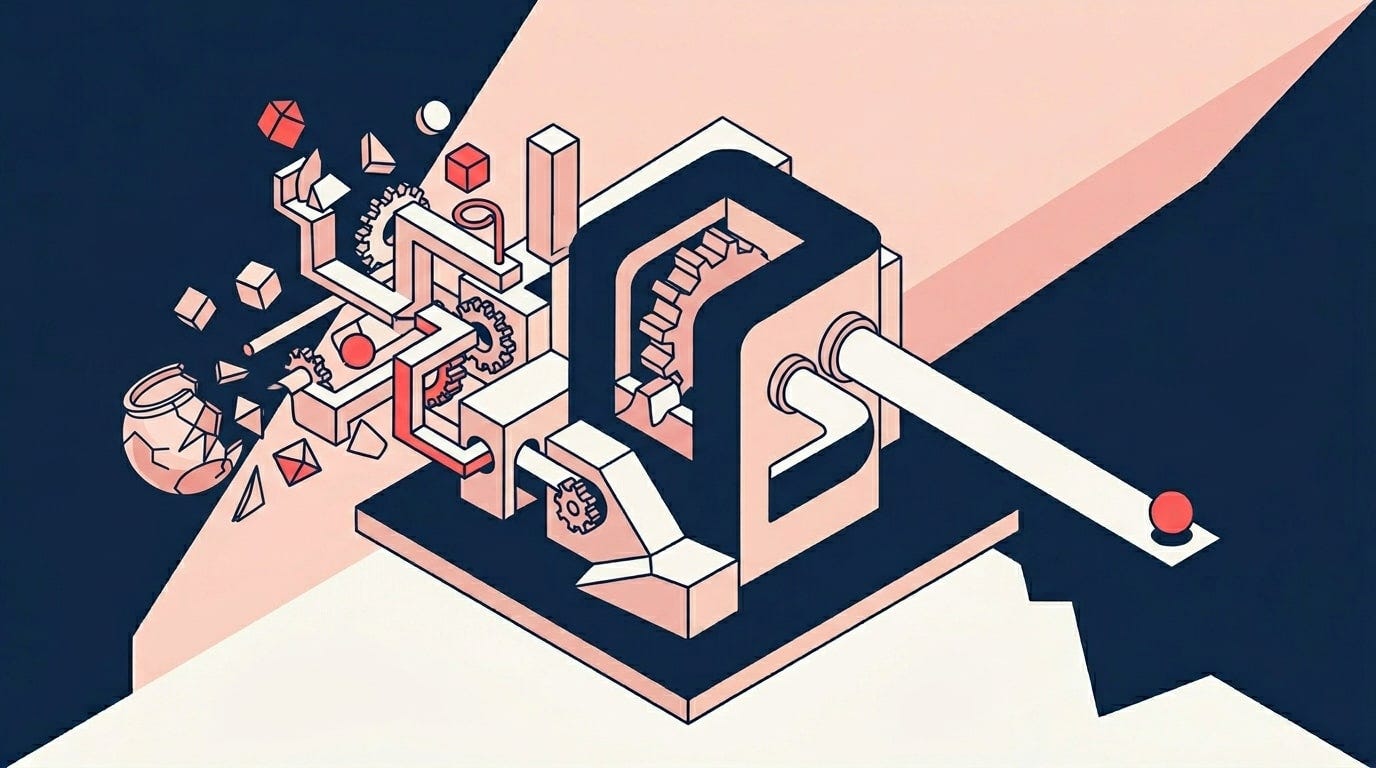
Schwartz ends his talk with the image of a fishbowl. Shatter it entirely, he suggests, and you don’t gain freedom. You gain paralysis.
No serious person would advocate for narrowness or imposed limitation. But the complete absence of constraint and the insistence that you can be anything, do anything, become anything at any time, may be less liberating than it appears.
Perhaps the question worth sitting with is not how to expand the menu further. But how to choose your fishbowl with intention. Not as a retreat from ambitions, more as the very structure within which ambition can breathe.
Freedom isn’t the absence of limits, but the ability to live coherently within them.
What limitations are you currently resisting that might, in fact, be the very conditions you need?